
In the age of AI, trust may be the last real moat.
1. A Gathering of Like-Minds
Recently I was honored to be among a select group of attendees invited to JAX Vineyards in SF to an event hosted by LILT AI. The small group included marketing leaders from companies like Ares Capital, Ubisoft, Microsoft, Zendesk, and others, and we were there to exchange ideas and stories about how AI is changing the landscape of marketing, as well as to hear insights and stories from one of the preeminent names in Brand and Marketing, Andy Cunningham. (And yes, she did have some fun Steve Jobs and Apple stories that she shared with us.)
As we swapped stories, experiences, and challenges we all were facing as marketers, and listened to Andy’s accumulated wisdom, one theme stuck out: As AI accelerates and makes it easier for more people to build, generate, and imitate products, strategies, and content, Brand is poised to become more important than ever.
2. The Current State of the Art
For the past 30+ years in the marketing world, especially in the digital and technology marketing world, conventional wisdom was that product wins, and performance marketing proves it. Build a product with better features, more clearly communicate the benefits, and set the performance marketing team loose. Drive traffic. Optimize conversion. Directly attribute outcomes to spend. A/B Test. Focus relentlessly on CAC and LTV. Double down on what works, discard what doesn’t. Rinse, repeat, and WIN!
None of this is wrong. Data is great! The feedback loop lets you learn quickly, and feel confident making decisions. It helps win arguments, and provides empirical proof that feels much more rigorous and tangible than all that gooey, fluffy Brand and marketing-speak that often comes down to opinions, preferences, and that elitist word, “taste.”
But. This line of thinking ends up overvaluing what can be measured immediately, and undervalues what takes time, sustained effort, and consistency. And increasingly, it is no longer enough.

3. AI: What is it Good For?
Andy reminded us last night that when the personal computer first came on the scene, everyone knew it was going to be revolutionary, somehow. That first revolutionary application that markets near-universally agreed would be the way to get computers into homes? Not as a productivity tool for spreadsheets and writing, not as a vehicle for entertainment and games, not as a personal assistant, but, as….(drumroll please)… a recipe management system! Ta-da!
[ crickets ]
Yes, seriously, this is what the brightest minds of their era came up with.
(But don’t get caught in the trap of thinking you would have done much better. I mean, Sora?)
As we all know now, it didn’t turn out that way. Personal computers eventually ended up everywhere, from our homes to our offices to our pockets and have applications that couldn’t have possibly been imagined 40 years ago, let alone 4 years ago in some cases.
4. AI Blows It All Up
So now we turn to AI — what is it going to be used for?
I’m not here to answer that question today. But I can tell you what we are already seeing it do. And content creation is the very least of it.
All those moats that companies used to rely on — the technical features, the development teams, the quality of the product, the time, effort, and expertise it took to create it and maintain it, the capital it took to do so — all of those are drying up, and quickly. AI is completely leveling the playing field in technology, and at an accelerating pace. What took a dedicated team of deep experts months or years to do last year can be accomplished by one or two driven creators using AI tools in a matter of weeks, if not days. Combine that with the falling costs of creation and the concentration of capital in already-dominant organizations, and it adds up to a siege engine that can cross any moat. (I’m kind of mixing metaphors here, but you get the point.)
This, of course, includes marketing, communication, and branding efforts. A story came up yesterday evening where a client of Andy’s was flummoxed, outraged, and paralyzed because another company had copied their marketing and branding to a T. “What do I do now!?” (Her answer was, if all that was unique about you was the copy on your website, then you weren’t doing enough in the first place.)
So your technical moat is gone. AI copy all sounds good enough (and completely interchangeable.) Your own great copy can and will be imitated, replicated, ripped off, duplicated. What’s left?
5. What Can Never Be Copied
The good news is, there’s a lot left. The most important things, in fact.
Let’s start with what’s at the core of all of it: your and your organization’s Identity. The unique combination of attributes, passions, experiences, and drives is something that no one else and no other organization could ever copy, no matter how hard they try.
That Identity gives rise to your Values, which in turn define your Mission. How you choose to express those values, to follow through on your mission, and all the thousands of choices you make in order to accomplish that, is your Brand. And while a Brand can contain all kinds of attributes and qualities that signal different affinities and evoke different emotions, all of what falls underneath Brand is really just shorthand for one thing:
Trust. Do your customers, your clients, your community of users, and others who have only heard of you, trust you to do the things you say you will do, to be the things that you say that you are?
That trust cannot be copied, bought, borrowed, or stolen, but it can very easily be lost.
However, there are proven ways to reinforce it, and good news: those are also non-fungible, uncopyable assets. They are your community of users who you serve. They are your reputation for solving problems and resolving issues when things go wrong. They are your consistency in expressing and demonstrating your brand and values. They are the story you tell to yourself and to others that helps them understand who you are and how you fit in with their own stories. And they are the clarity you have in articulating those unique elements that make you, you.
6. If It’s So Easy, Why Doesn’t Everyone Do It?
Answer: It’s not.
Doing this work effectively is one (yuuuuge) challenge. Building buy-in for it from bottom to top of the organization is another.
I’ve been lucky enough to work with many brilliant, effective, and highly experienced executives, marketing leaders, and strategists over the years, in a number of industries. And in 19/20 cases, Brand gets quickly relegated to being a ‘nice to have.’ For many of the reasons discussed above, performance marketing is always the first place people go. It’s safe. There are measurable results, tomorrow! It relies on data, hard evidence, and shuts down arguments.
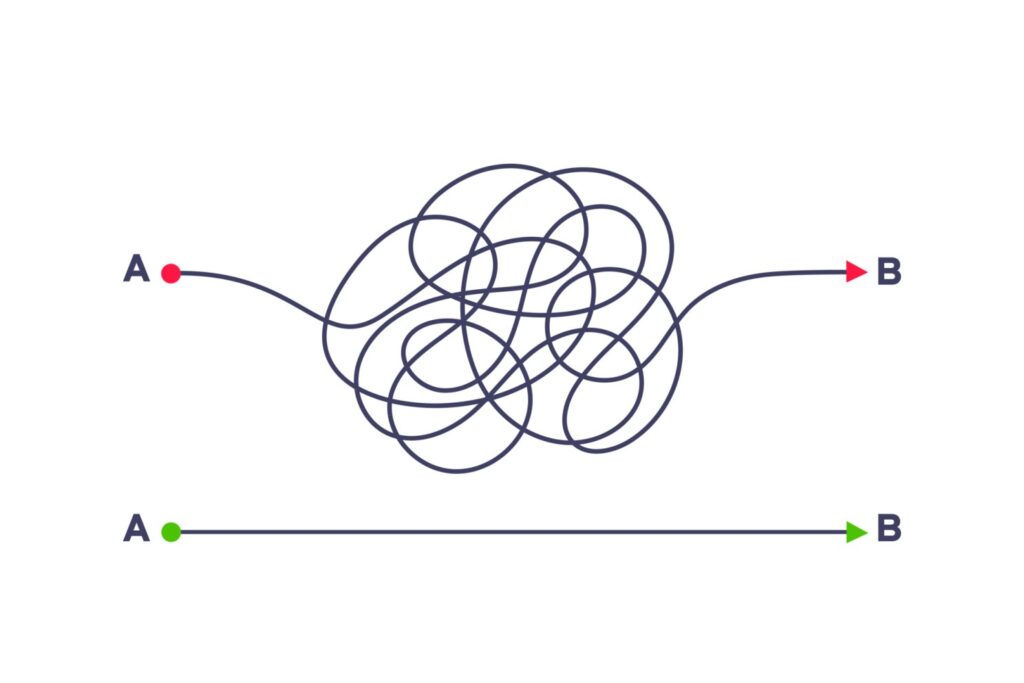
Brand work is the opposite, in many ways. It takes a lot of time, both to get right and to see results. It needs to be consistently communicated across multiple channels and touchpoints, both internally and externally. The effects of great Brand work are indirect, and cumulative. It always starts slow. It’s much harder to list as a line item on a quarterly spreadsheet. It’s one of those things where the value is obvious in the rearview mirror, but impossible to prove in advance.
But the difficulty of measuring it does not mean it lacks value. It’s a long-term asset, and it can’t be measured with short-term tools.
7. Not Performance vs Brand, but Performance x Brand
Brand is a performance multiplier. If the first time someone hears about your company is in the headline of a Google Ad (and let’s face it, by now most savvy consumers have ad blockers installed so they won’t even see it), you don’t have much space to make a strong impression.
But if they have heard people talk about you positively, if they’ve seen social media posts about you that are favorable, if they recall an article that you were mentioned in, then seeing your ad will mean a lot more — and even better, they might be searching you out directly.
Performance marketing without brand is a steep uphill climb. But if you invest in Brand, you start to flatten that incline. And if you do it consistently and strongly enough, you might even turn that into a walk in the park.
Don’t abandon performance marketing — use Brand to level the playing field.
8. Land and Expand
This is where a clear understanding of your company’s Identity, mission, and values can help focus your efforts. Brand should help you create a clear and compelling message that’s laser-targeted at your ICP. Not only can it help you tailor your message and the story you tell that will elicit that strong emotional response from the people you want to love your product, it can also help inform and narrow the scope of where you put your performance marketing efforts. (But you have to verify you’ve found the right target audience.)
Storytime!
Andy shared a Steve Jobs story that seems stunningly obvious in retrospect, but took Steve himself a decade or more to understand. I’ll be radically summarizing it here, but in essence, when Steve launched the Macintosh, he was targeting the ‘pirates’ in the corporate world — people with taste, vision, and a desire to do things beautifully and differently. And that’s who Apple went after with the Macintosh. (Spoiler alert: it didn’t work.) People loved it and could clearly see it was better — but they also knew there was no way they could convince their corporate overloads and bean counters to spring for something that was multiple times as expensive as a Windows PC.
After Jobs was kicked out of Apple and they miraculously didn’t kill the Mac, it slowly found its user base among creatives and creators of all kinds who loved the way it worked, it’s focus on taste, reinforced their own self-perceived value as a ’different’ kind of thinker. (Foreshadowing!)
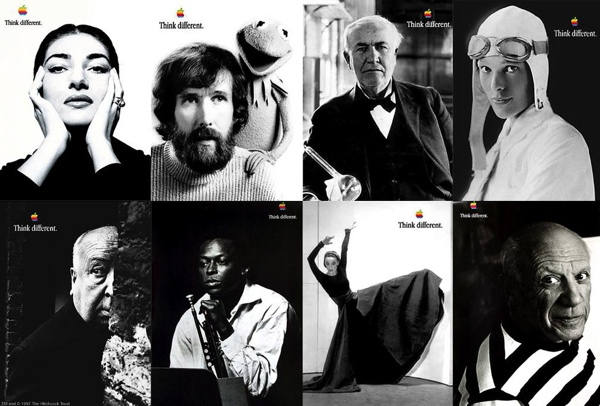
When Steve came back to Apple years later, the first thing he did was launch a massive and wildly successful marketing campaign — Think Different. It explicitly tied together the people who had been die-hard, anti-establishment Mac users to the great artists and visionaries who were universally beloved and recognized as having moved art, politics, science, and civilization itself forward. He and Jonny Ive launched iMac, a wildly colorful computer that wasn’t meant to be found in offices and boardrooms. Apple also release the iLife suite of software that focused on artistic creativity, from photos to movie-making to music and more, standing in contrast to Microsoft’s monolithic Office suite of products.
All this and more cemented the Mac as the tool for creative people. And wouldn’t you know it, every single one of us nurtures a creative spark inside of us — we all want to create. It’s an actually universal value. By ‘landing’ firmly on the right target customer, cementing that emotional response by creating products and services that matters deeply to that audience, Apple has been able to effectively ‘expand’ to nearly the entire rest of the population by keying in on that feeling we all have of wanting to be creative, special, different, and seen.
When crafting a brand message, when you are excited about how awesome your product and your company is, (and when you are trying to woo investors), it’s easy to start thinking “well, this is for everybody!” EVERYONE needs a thneed! The fact is that while TAM is a great way to raise capital, it’s a terrible way to focus your Brand.
Get comfortable with getting narrow. Find that key group that is going to deeply love your product (and verify that they do). Pay attention to what about it connects with them. Build that genuine love. Keep going, and keep growing.
9. Learning from Laundry Detergent
Another topic of conversation that evening was the available learnings from the height of CPG marketing. In the 1950s and 60s, huge strides forward and innovations were being made with materials and chemical science that, combined with a growing baby-boom of new families and post-war wealth, led to a Cambrian-like explosion of products like breakfast cereal, laundry detergent, and countless others that also led to a commensurate explosion of brands, each vying for the attention and loyalty of the newly minted American consumer.
This was the Mad Men era, and brand was king. Companies pulled out all the stops and came up with endless ways to create and make brands stick out on the shelf, and stick in the mind. From jingles, to packaging innovations, to TV commercials, catchphrases, product comparisons and demonstrations, and more, the CPG industry was deeply innovative in finding ways to tell their story and make their (essentially fungible) products stick out from the rest. Many of the winners from that era are still with us today.
Now that we are seeing similar convergence of features and sophistication in the technology and software sector thanks in a large part to AI, there will be a lot of opportunities for today’s brands to take lessons from that era and to find new ways to tell their stories in today’s key mediums in a way that stands out from the rest of the noise. It’s too early to say what those new ways are going to be — it’s up to us to figure them out.
10. Slop Goes Splat
Guess what? Those brand innovations and new discoveries I just talked about? No AI engine is going to create those.
Another topic our group discussed the night was the fast-growing backlash against AI-generated content. We’ve all felt it, and it’s only getting more pervasive — that sense when you read something, listen to that uncanny voice, see that image that looks both too perfect and not, or hear that same, canned sentence structure — that feeling that no human being made this. So why should I care?
Much like our recipe organizing computer, it seems that generating content is not going to be the key use case for how marketers harness AI.
What will be?
Lots of great answers to that question are already emerging. Many of us that night mentioned ways we were using AI tools to enhance our own abilities rather that simply replace content creation, which included:
- AI as thought partner; using AI tools to help point out blind spots and round out our thinking
- AI as research assistant; gathering and aggregating information like competitive analysis, market research, or extracting information from dense sources like scientific papers
- AI as a workflow engine; using AI processes and tools to more simply and quickly connect disparate pieces of software or to automate repetitive processes
- AI as an automation layer; setting up AI tools that are more sophisticated and flexible than your standard “if; then” engines to move faster and smarter than was recently possible for the non-technical marketer
The above is a just a short list of some of the ways I am using AI myself, many other examples included fielding, analyzing, categorizing, and extracting information from incoming contacts from customers and users, qualifying leads, customizing communications down to the individual user level, and many others.
In all likelihood however, that killer app for AI and marketing has yet to be discovered.

In Conclusion: What Cannot Be Copied?
(1) Last week, at a LILT-sponsored gathering with senior marketing leaders about AI with Andy Cunningham, we kept coming back to one idea: as AI makes more things easier to build and imitate, Brand matters more, not less. (2) For years, especially in tech, the prevailing logic has been simple: product wins, performance marketing proves it, and the numbers tell you what to do next. (3) But every major technology shift is poorly understood at first, and AI is almost certainly bigger than the narrow use cases we currently fixate on. (4) What is already clear is that AI is collapsing many of the old moats by making content, code, products, and even business models faster and easier to replicate. (5) What remains difficult to copy are the things underneath all of that: identity, reputation, community, consistency, and ultimately trust—the belief that you are who you say you are and will do what you promise.
(6) The reason Brand still gets underfunded is not because it lacks value, but because it compounds slowly and resists the short-term, spreadsheet-friendly logic that makes performance marketing feel so safe. (7) But Brand is not the opposite of performance; it is what makes performance more effective by ensuring that when people encounter you, they are not meeting a stranger. They understand your story. (8) The strongest brands do not start broad, but narrow—earning deep attachment from a specific audience first, and only then expanding outward, as Apple did by winning creatives before becoming aspirational to nearly everyone else. (9) In that sense, today’s AI-saturated market has something to relearn from the CPG era: when products start to look functionally similar, story, memory, affinity, and trust become the real differentiators. (10) Which is why the most valuable use of AI is unlikely to be flooding the world with more interchangeable content, but by bring the human story more effectively into your marketing: AI can help humans think better, move faster, and show up more distinctly.
Because in the end, you can copy almost anything now — except trust.